
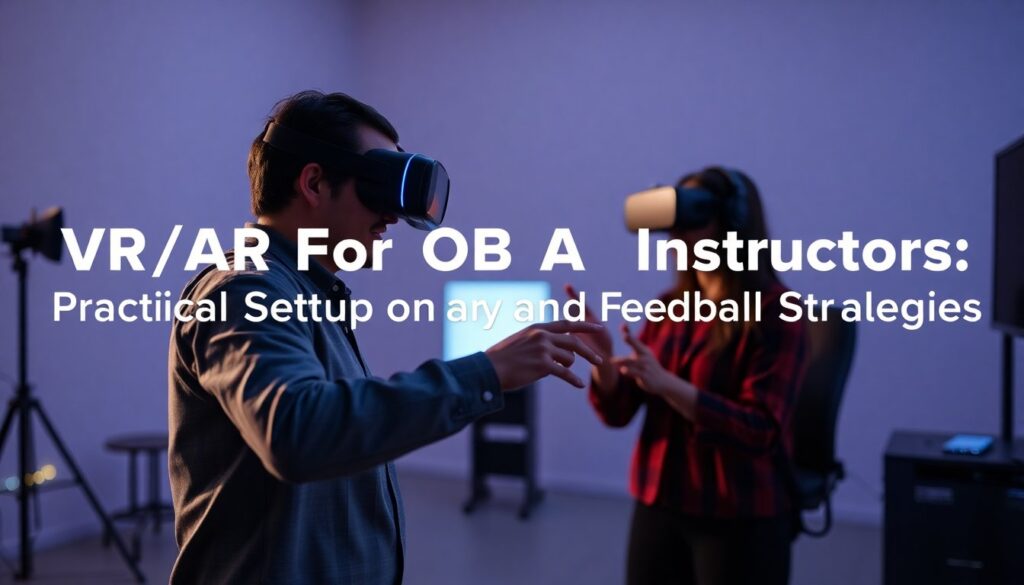
vr ar oboa instructor setup feedbackmagazine helps instructors adopt VR and AR in OBOA courses. The article explains clear hardware choices, simple classroom layout, and feedback methods. It shows how they set up systems, record sessions, and guide students. It gives practical steps for 2026 that save time and improve student skill.
Key Takeaways
- VR and AR transform OBOA instruction by providing immersive, repeatable practice with immediate, visual feedback that enhances student skills.
- Instructors should select mixed-reality headsets with inside-out tracking and wired audio interfaces to ensure precise oboe sound capture and low latency.
- Effective classroom setup includes stable camera placement at mouth-level, clear space for movement, and optimized network use to maintain session quality.
- Building feedback loops with recorded sessions, clear rubrics, annotated replays, and student reflections accelerates learning and promotes practice ownership.
- Scheduling blind assessments and using aggregated data help reduce grading bias and refine the curriculum to target skill gaps across students.
Why VR/AR Transforms OBOA Instruction Today
VR and AR change how instructors teach OBOA. They provide immersive practice that mimics real performance conditions. Instructors can pause a session, replay a gesture, and highlight breath or finger position. Students gain immediate, visual feedback they can follow. The tech lets instructors standardize drills and keep everyone on the same learning path.
Instruments present sound and posture challenges that VR and AR handle well. The systems show hand angles and tonguing cues. They deliver synchronized video and spatial audio so students hear intonation and balance. Instructors can compare student data to model performances. They can track progress with repeatable metrics.
VR and AR also reduce scheduling friction. Instructors can give lessons that do not rely on one physical studio. Students can practice with accurate simulations at home. That access raises practice time and skill retention. Programs that pair live coaching with simulated practice produce steady gains.
Institutions that adopt VR and AR see more consistent assessment. They set the same reference recordings for all students. They reduce subjective grading variance. Instructors can focus on musicality and expression, not only basic technique, because the tech captures routine mechanics precisely.
Essential Hardware, Software, And Classroom Setup For Instructors
Instructors should choose reliable headsets, low-latency audio, and accurate tracking. They should pick a mixed-reality headset with inside-out tracking and a wired audio path for the oboe. They should use a USB or XLR interface and a condenser microphone that isolates reed sound. They should pair the headset with a workstation that meets the software requirements.
They should install software that supports OBOA-specific modules and recording. They should choose platforms that log finger motion and breath data. They should update firmware and drivers before class. They should test latency and sync audio to video before each session.
Classrooms should have clear space for movement and a stable camera setup. They should place the camera at mouth-level and slightly to the right for right-handed players. They should set lighting that reduces glare on sensors. They should mark the floor for consistent player position.
Network setup matters. Instructors should use wired Ethernet when possible. They should limit background traffic during lessons. They should configure priority for audio and video packets. They should have a backup local recording if a cloud session drops.
They should train support staff on headset fit and hygiene. They should provide disposable covers and cleaning wipes. They should keep spare cables, batteries, and mouthpiece clips on hand. They should document a quick checklist for session setup and teardown.
Designing Effective Feedback Loops: Assessment, Recording, And Student Reflection
Instructors should build feedback loops that include assessment, recording, and reflection. They should record each practice in VR or AR. They should keep a short metadata file that lists tempo, piece, and target skill. They should timestamp key moments for quick review.
They should use rubrics with clear criteria. The rubric should list tone, intonation, breath control, articulation, and posture. They should score each item with a simple scale and attach short notes. They should share the rubric with students before a session so students know the target.
Instructors should show annotated replays during review. They should mark errors and highlight correct choices. They should pair visual markers with a brief audio note that points to one specific change. They should keep comments short and actionable.
Students should reflect after each session. They should state one success and one next step. They should save that reflection with the recording. Instructors should review reflections and respond with a focused tip. This cycle creates clear ownership of practice.
They should schedule periodic blind assessments. An independent reviewer should score a sample recording without knowing the student identity. They should compare blind scores to instructor scores to check bias. They should adjust rubric wording if they find consistent gaps.
Finally, instructors should use aggregated data to guide curriculum changes. They should track which skills lag across a cohort. They should design targeted mini-lessons and micro-practice tasks. They should repeat the measurement and show improvement in later recordings.