
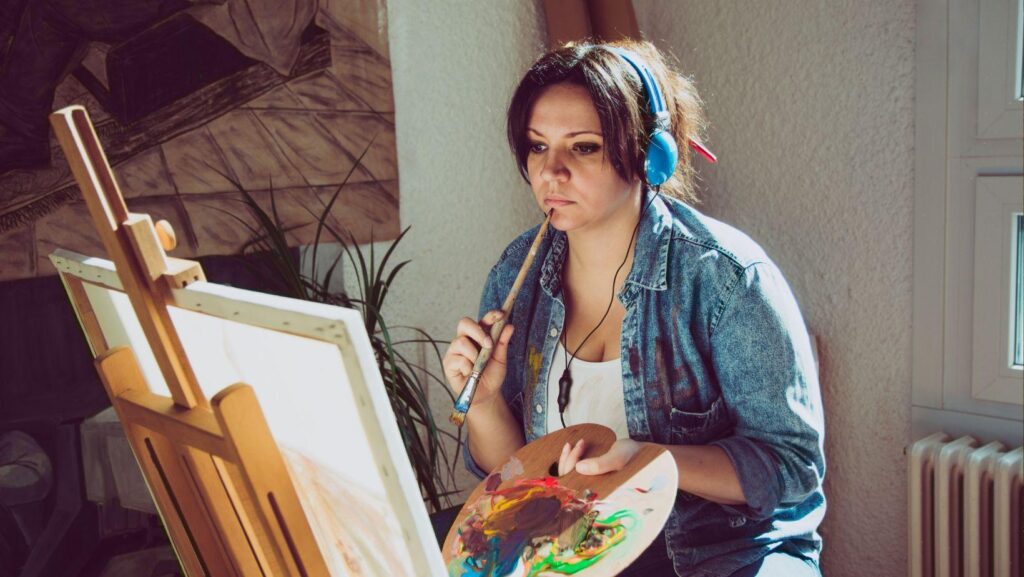
A blank canvas, a fresh sheet of paper, or an untouched digital document. You sit there with a paintbrush, pen, or keyboard ready, and your inner critic is already whispering doubts. What if I mess this up? This staring contest with a blank space is something every creator knows too well. Luckily, there’s a remarkably easy way to break the ice and just get started: putting on some music.
Music is so much more than just background noise for when you’re making art or creating something from scratch. It acts as a bridge that helps you jump from overthinking into actually doing. The second you press play on the right song, the entire energy of the room shifts. Music instantly alters your mood, clears out the mental clutter, and helps you slide right into that perfect creative zone—the flow where you forget about the time and just paint, write, or design.
The Science of Sound and Creative Flow
What does creative flow actually mean? It’s a state of mind where you are so deeply immersed in what you are doing that time loses its meaning, self-critical thoughts fall silent, and your hand seems to move almost entirely on its own.
From a neurological standpoint, this process is a beautiful symphony within the brain. Research shows that the right kind of music can help our brains shift into alpha and theta wave states, which are closely linked to relaxation, deep focus, and creative problem-solving. (For more on this, you can check out this insightful article on how music affects the brain by Harvard Health).
For instance, a steady, repetitive rhythm keeps the mind anchored to the present moment, while instrumental tracks minimize language-based distractions. By intentionally selecting your background sounds, you are consciously managing your mood and drawing an emotional roadmap for whatever you are about to bring to life, whether it is a painting, a story, a line of code, or a business strategy.
How to Build Your Own Creative Playlist
Finding the right music comes down to what you’re working on and the kind of energy you need. If you’re tackling a huge, abstract painting, brainstorming a new marketing campaign, or designing a bold website, you’ll probably want something high-energy—like upbeat electronic tracks or sweeping movie soundtracks.
But if you’re doing a detailed pencil sketch, editing a tricky piece of writing, or organizing data, you’ll want the opposite. Smooth lo-fi, ambient beats, or subtle nature sounds are perfect for keeping your mind calm and your focus steady.
One great rule of thumb is to opt for instrumental music. Lyrics have a tendency to activate the language-processing parts of the brain, which can accidentally wake up your inner analytical critic and disrupt your train of thought. When you strip away the words, the intuitive and visual side of your brain gets complete freedom to take over.
Once you find a genre or style that works for you, turn it into a ritual. By playing the exact same playlist every time you sit down to work, your brain quickly learns to recognize it as an auditory cue: “Alright, it’s time to focus and create now.”
Practical Tips for Creative Harmony
Experimenting with music should be fun, not another thing to overthink. There are no strict rules here, but a few simple ideas can help you get started:
Music and Paint by Numbers: The Ultimate Flow State
Much like music, certain structured creative methods can guide your mind effortlessly into a calm, focused state. Sometimes, the simple act of trying to make too many decisions at once—like picking the perfect color palette, finding the exact right words for a first draft, or inventing a design from scratch—introduces so much decision fatigue that reaching a flow state feels impossible.
This is where structured creative activities, such as paint by numbers or coloring books, come into play. For example, paint by numbers is a classic and brilliant art form where a pre-printed canvas, whether it features an intricate floral print or a complex portrait, is divided into small, numbered sections, each corresponding to a specific color. You don’t have to worry about composition, perspective, or anatomy; your only task is to fill in the spaces.
When you pair this with the right music, a highly meditative, rhythmic routine is born. Dipping your brush into the paint and following the numbers to the beat of the music silences the inner critic entirely. It acts as an accessible form of art therapy, relaxing the brain and allowing you to enjoy the pure, uncomplicated joy of creating and watching colors come to life.
The Perfect Duet
Creativity and music just belong together. They complement each other perfectly, like a great duet: the music sets the rhythm and the mood, while you translate those sounds into shapes, words, ideas, or colors. It doesn’t matter if you’re facing a completely blank canvas, starting a brand-new project from scratch, or just relaxing with a structured activity like paint by numbers. Music is always your best companion.
So, the next time you’re about to sit down and create, put on your favorite track, take a deep breath, and let the rhythm guide you. Creativity isn’t something you need to force—it’s simply about letting go and flowing along with the music.