
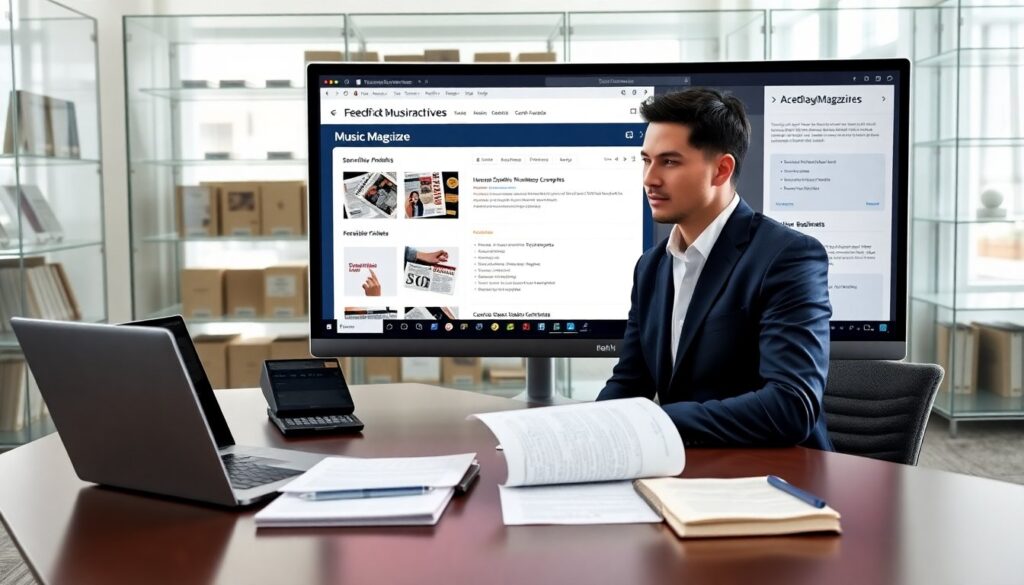
Feedbackmagazine music business archives appear at the top of many researchers’ lists. The archives collect interviews, analysis, and case studies. They store material dated from the 1980s to 2026. The guide explains what the archives include and how they serve students, journalists, managers, and executives. The guide shows clear steps for access, search, and citation.
Key Takeaways
- The Feedbackmagazine music business archives offer extensive interviews, articles, and case studies spanning from the 1980s to 2026, serving researchers, students, and industry professionals.
- Users can access the archives online with free previews and subscription-based full access, featuring advanced search filters, citation exports, and curated thematic collections.
- The archives include rich metadata, editorial notes, and updated content to aid discovery and support detailed research on labels, artists, industry events, and legal issues.
- Effective search strategies use precise keywords, Boolean operators, date ranges, and controlled vocabulary to find relevant materials within the Feedbackmagazine music business archives.
- The archive supports exporting bibliographic records in MLA, APA, and Chicago formats, enhancing usability for academic citation and professional reference.
- Assistance options like help desks and usage dashboards improve navigation and maximize the research value of the Feedbackmagazine music business archives.
What The Feedback Magazine Music Business Archives Include
The feedbackmagazine music business archives contain articles, interviews, and data reports. They host feature stories on labels, managers, and producers. They keep interview transcripts with artists and executives. They archive charts, release schedules, and promotional materials. They include legal briefings and business analyses. The archive stores metadata for each item. The metadata lists author, date, and tags. The archive marks content by format and region. The archive includes scanned print issues and born-digital pieces. The archive keeps editorial notes for some items. The archive links to related content and follow-ups. The archive flags embargoed material and updated corrections. Researchers will find timelines of major industry events. Industry practitioners will find case studies on campaigns and contracts. Students will find primary-source interviews and original reportage. Librarians will find catalog records and usage rights statements. The archive supports export of bibliographic records in common formats. The archive updates monthly with new articles and retrospectives. The archive uses consistent taxonomy to ease discovery.
How To Access, Search, And Navigate The Archives
Users can access the feedbackmagazine music business archives online. The site offers free access to selected content. The site requires a subscription for full access. Institutions can request site licenses for library access. The archive presents a visible search bar on the landing page. The archive offers filters by date, author, and type. Users can sort results by relevance or date. The archive displays excerpts and thumbnails for quick review. The archive supports saved searches and email alerts. The archive provides a site map and FAQ. The archive offers a help desk with chat and email. The archive allows bulk download for licensed users. The archive links to citation exports in MLA, APA, and Chicago. The archive provides a usage dashboard for subscribers. The archive documents access levels for restricted items. The archive lists contact info for rights requests. The archive labels items that require permission for reuse. The archive supplies high-resolution scans on request. The archive offers curated collections for themes like streaming, A&R, and publishing. The archive updates search algorithms to improve relevance. The archive logs changes to articles and records revision history.
Advanced Search Tips For Finding Relevant Articles And Interviews
Searchers should start with precise keywords. They should use the phrase “feedbackmagazine music business archives” when they need site-wide results. They should wrap exact phrases in quotes to match full titles. They should combine author names with dates to find specific interviews. They should use Boolean operators: AND, OR, NOT. They should filter by content type to separate interviews from analysis. They should set date ranges to limit results to a year or decade. They should use tag filters for topics like royalties, sync, or touring. They should sort by relevance to see the best matches first. They should preview excerpts to confirm relevance before opening full records. They should save useful queries and export results as RIS or BibTeX for citation tools. They should check linked resources and follow cross-references in articles. They should use synonyms and alternate spellings for artist names. They should use the archive’s controlled vocabulary when it exists. They should contact the help desk when a search returns incomplete results. They should request digitization when print-only content appears relevant. They should document search steps for reproducibility in research reports.