
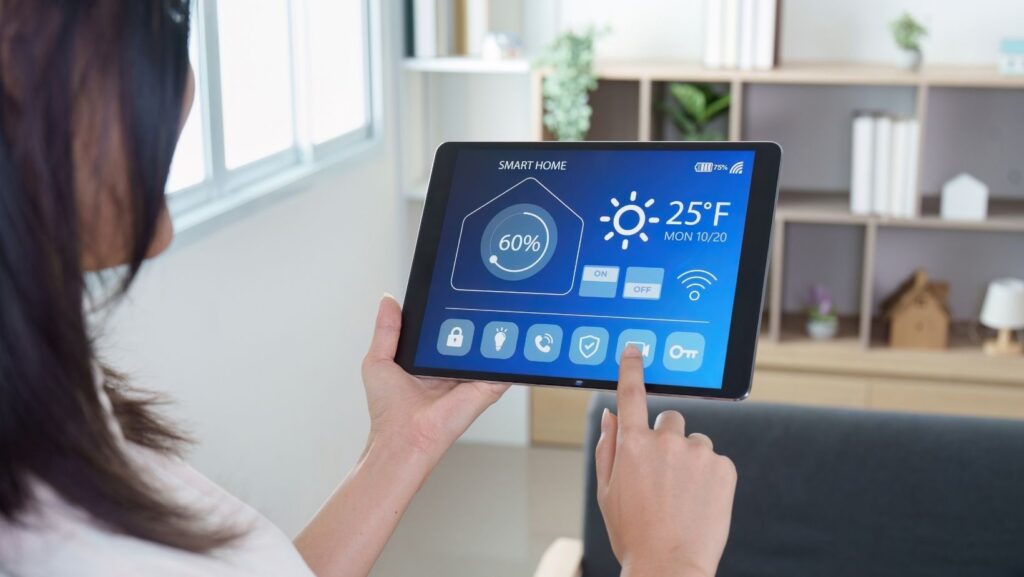
Picture waking up to blinds that ease open with the morning light, a thermostat already dialed to your preferred temperature, and fresh coffee brewing in the kitchen — all without lifting a finger. This kind of effortless living is no longer the stuff of science fiction; it’s where smart home evolution is firmly headed. Simple automated conveniences, like robot vacuums that quietly kept floors tidy on their own, planted the seeds for something far more ambitious: an era of AI-powered automation where homes don’t merely respond to commands, but genuinely anticipate what you need. For homeowners who care about lasting comfort, efficiency, and sustainability, understanding this shift is the natural starting point for building a truly intelligent living space.
What Defines a Truly Intelligent Home?
The most significant leap in modern smart homes isn’t raw connectivity — it’s the move from reactive to predictive. Rather than waiting to be told what to do, intelligent systems learn the rhythms of a household: when people wake up, how they like the lights in the evening, and how the weather outside shapes comfort inside. Then they act on that knowledge, quietly and reliably.
In practice, this might look like a home’s lighting dimming automatically once occupancy sensors register that everyone has settled in for the night, or a climate system pre-cooling rooms hours before a heat wave rolls in. None of that happens by accident — it’s the result of AI algorithms continuously refining their understanding of how a household actually lives.
Key characteristics of a genuinely intelligent home include:
- Proactive automation over manual control
- Learning from user behavior without constant reconfiguration
- Whole-home integration rather than a patchwork of disconnected gadgets
Key Takeaway: Intelligent homes prioritize anticipation, saving time and energy without demanding constant attention.
The Role of Interoperability in Seamless Smart Living
One of the most persistent frustrations with early smart home setups was the sheer number of apps required to manage everything. A different interface for every device quickly became more hassle than convenience. The emergence of universal standards like the Matter protocol has gone a long way toward fixing that, allowing products from different manufacturers to communicate through a single, unified dashboard.
| Aspect | Fragmented Ecosystems | Interoperable Systems (e.g., Matter) |
|---|---|---|
| Device Control | Multiple apps required | Single dashboard |
| Setup Complexity | High, brand-specific | Simplified, universal |
| Reliability | Frequent compatibility issues | Seamless cross-brand operation |
Practical tip: When expanding your setup, prioritize Matter-certified devices. They offer the broadest long-term compatibility and significantly reduce the risk of your investment becoming obsolete as the technology matures.
Smarter Energy Management for Sustainable Homes
AI-driven energy systems have moved well beyond simple scheduling. They now balance electrical loads, integrate with solar panels, and adjust consumption dynamically in response to real-time conditions. Households that have adopted these tools report 10–40% energy savings through automated adjustments alone — a meaningful reduction in both household costs and environmental footprint. Sustained growth projections across the industry reflect just how widely that value is being recognized.
Implementation tips:
- Pair smart thermostats with weather-aware AI for proactive, anticipatory climate control
- Use battery storage systems to optimize efficiency during peak-demand hours
- Monitor usage through dedicated apps to uncover personalized savings opportunities
Pro Tip: Integrating renewable energy sources like solar doesn’t require a full home overhaul. Smart energy management systems can be layered onto existing infrastructure gradually, making the transition far more manageable.
Enhancing Security, Health, and Everyday Wellness
Security
Today’s AI security systems do considerably more than detect motion. Facial recognition and behavioral analysis can distinguish familiar household members from unfamiliar visitors, which dramatically cuts down on false alarms. Doors can auto-unlock for recognized residents, smoothing out daily routines while keeping protection genuinely robust.
Wellness
Smart homes are increasingly attentive to the people living inside them. Air quality monitoring can trigger purification systems the moment pollutants spike, while circadian lighting adjusts color temperature throughout the day to support natural sleep cycles. Integration with wearables can even inform environmental changes based on real-time health data. Crucially, edge computing — processing data locally rather than routing it through the cloud — keeps these functions fast and privacy-respecting.
Designing Smart Homes That Blend In
The most sophisticated smart homes are often the hardest to spot. Sensors embedded in walls, voice assistants integrated into furniture, and controls designed to complement interior aesthetics have replaced the cluttered, gadget-heavy look that defined earlier setups. Design professionals increasingly treat technology as an architectural element in its own right — invisible infrastructure that improves daily life without drawing attention to itself.
Bringing It All Together: Steps to Build Your Intelligent Home
Smart homes have traveled a long way from novelty gadgets to cohesive, intuitive ecosystems. Building one thoughtfully comes down to a handful of deliberate steps:
- Assess your current setup for compatibility gaps
- Prioritize foundational systems like energy management and security
- Invest in scalable, standards-compliant technology
- Test integrations gradually to confirm reliability before expanding further
The most useful shift in mindset is to stop thinking of your home as a collection of devices and start thinking of it as an evolving partner in daily life. Start small — even a single energy monitoring tool can surface surprisingly useful insights. Each step toward greater integration compounds over time, ultimately shaping a living space that works around you rather than the other way around.