
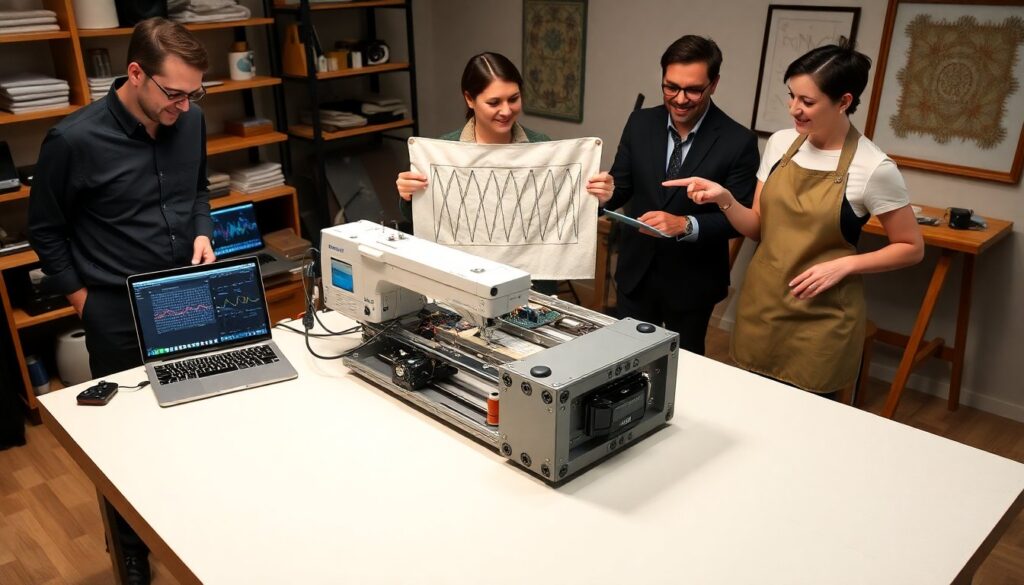
The musical quilting robot Fudmagonez blends sewing and music in one device. It reads musical data and converts that data into stitch motion. Designers use the musical quilting robot Fudmagonez to make quilts that play and visual scores that sew. Engineers and artists test the musical quilting robot Fudmagonez in studios, classrooms, and galleries.
Key Takeaways
- The musical quilting robot Fudmagonez uniquely converts musical data into precise quilting stitches, blending art and technology.
- This robot supports MIDI or audio inputs, translating pitch and tempo into stitch patterns for creative textile design.
- Artists and educators use Fudmagonez to create quilts that reflect music performances and teach music, coding, and sewing.
- The robot features modular, repair-friendly design with safety fail-safes and supports custom add-ons for enhanced creativity.
- Users can purchase, build from open-source plans, or modify Fudmagonez and should perform regular maintenance for optimal performance.
What Is The Musical Quilting Robot Fudmagonez?
The musical quilting robot Fudmagonez acts as a machine that sews while it interprets music. It receives MIDI or audio input and translates pitch, velocity, and tempo into stitch length, density, and path. Makers load patterns or let the robot improvise from live sound. The robot moves fabric on a carriage, drives a needle assembly, and logs data for playback. The musical quilting robot Fudmagonez supports standard quilting fabrics and specialty threads. It also exports pattern files for manual editing and collaborative work.
Core Components And Design Principles
Designers build the musical quilting robot Fudmagonez around modular parts for ease of repair and upgrades. They focus on precise motion, timing fidelity, and safe needle operation. The system uses open protocols to accept common music and sewing formats. It uses fail-safes to stop motion on stitch errors or thread breaks. The musical quilting robot Fudmagonez offers user controls that balance automation with hands-on craft. It supports custom modules so teams can add sensors, lights, or audio outputs. The design keeps latency low so musical input matches stitch output closely.
Creative Projects And Practical Applications
Artists use the musical quilting robot Fudmagonez to make quilts that document concerts and field recordings. Museums display stitch-scores that translate archival audio into textile patterns. Educators use the robot to teach basic coding, music theory, and textile craft in one lesson. Designers prototype textile sensors by stitching conductive thread for interactive garments. Performance groups pair the robot with live instruments so the machine responds in real time. Small studios use the machine to add consistent decorative stitching to limited-run products.
How To Buy, Build, Modify, And Care For A Fudmagonez
Buyers can purchase complete units from the original maker or from licensed resellers. Hobbyists can build the musical quilting robot Fudmagonez from open-source plans and off-the-shelf parts. Builders follow wiring diagrams, mount motors, and flash the controller firmware. Modders add sensor kits, custom needle heads, or audio outputs. Owners lubricate rails, replace needles, and check thread paths weekly under regular use. They update firmware as the maker issues security and feature patches. Owners store the robot in a dry space and keep spare needles and thread on hand.