
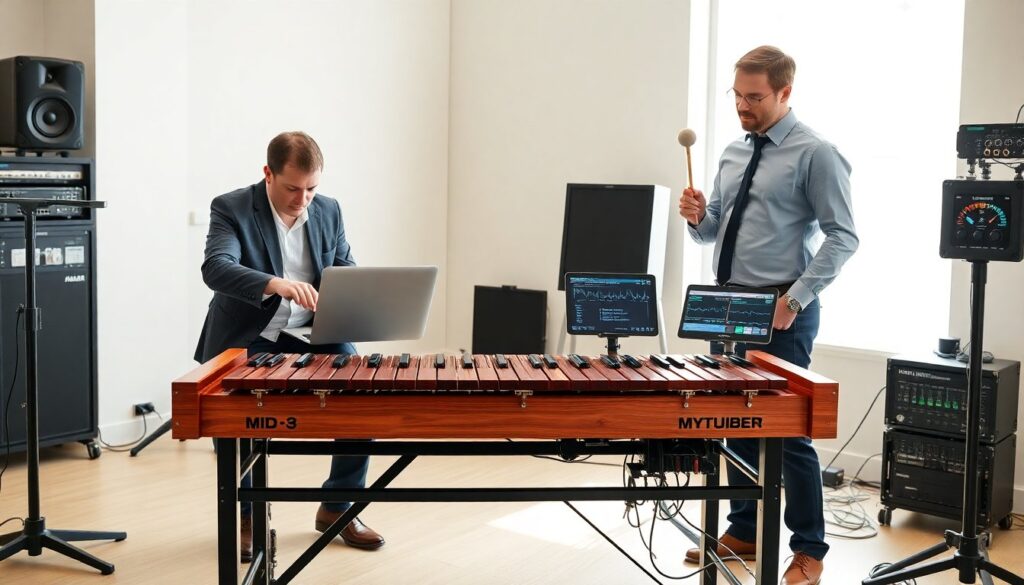
The remotely operated xylophone FDBMagzner brings remote actuation to a classic tuned percussion instrument. It offers automated playing, MIDI integration, and live control. Musicians, educators, and sound designers use it for performance, installation, and experimental music. This guide explains what it is, how it makes sound, how to set it up, and how to use it in creative projects.
Key Takeaways
- The remotely operated xylophone FDBMagzner enables automated playing with MIDI integration, ideal for performers, educators, and sound artists seeking remote control and complex rhythms.
- Its mallet actuators—using solenoids, servos, or pneumatics—strike tuned bars to produce sound, with each actuator type offering different dynamics and maintenance needs.
- The device supports multiple control protocols such as MIDI over DIN, USB-MIDI, and network OSC, and requires a regulated DC power supply tailored to actuator specifications.
- Tone shaping is achieved by selecting bar materials, adjusting mallet hardness, strike position, and using dampers or EQ to refine the sound output.
- Setting up involves stable mounting, calibrating actuator timing and velocity, safety testing to prevent overheating, and strategic microphone placement for optimal live sound.
- Regular maintenance includes inspecting mounts, cleaning bars, replacing mallet tips, checking wiring, and humidity-controlled storage to ensure reliability and longevity.
What The Remotely Operated Xylophone FDBMagzner Is And Who It’s For
The remotely operated xylophone FDBMagzner is an electric-actuated xylophone that receives digital commands. It translates MIDI or serial messages into per-note strikes. It suits performers who want remote control during shows. It suits educators who need repeatable demonstrations. It suits sound artists who require precise timing or dense polyrhythms. It suits installations that require unattended operation. It supports hands-free playing and complex arrangements that a single player cannot execute alone. It connects to common digital audio setups and standard controllers.
Key Components And How They Work
The FDBMagzner contains mallet actuators, a control board, a power supply, and a frame. The mallet actuators strike the bars. The control board interprets commands and triggers actuators. The power supply feeds the actuators and electronics. The frame holds the bars in correct spacing. The bars use tuned hardwood or synthetic materials. The system uses mounting points that reduce sympathetic vibration. The device exposes standard ports for MIDI, USB, or network control. The enclosure protects electronics while still allowing sound projection.
Actuation Mechanisms: Solenoids, Servos, And Pneumatics
Solenoids provide fast, direct strikes and simple control. They suit percussive styles with clear attack. Servos offer variable strike angle and velocity control. They suit nuanced dynamics and quieter passages. Pneumatic actuators use controlled air pressure to move mallets. They suit smooth repeats and softer timbres. Each actuator type changes response time and maintenance needs. Solenoids require robust drivers and frequent lubrication. Servos need calibration for consistent velocity. Pneumatics require an air source and valves that resist leaks. The choice affects tone, weight, and portability.
Control, Connectivity, And Power Requirements
The FDBMagzner accepts MIDI over DIN, USB-MIDI, or network protocols like OSC. The control board maps incoming messages to actuators. The user can load velocity curves and latency compensation. The device requires a regulated DC supply or an internal power module. Solenoids draw high current during strikes and need a supply that can handle peak loads. The system often uses a dedicated 12–48V supply depending on actuator type. The device supports external sync to keep timing with other gear. The manufacturer includes wiring diagrams and recommended fuses.
How The FDBMagzner Produces Sound And How To Shape Tone
The FDBMagzner produces sound by striking tuned bars. The strike excites fundamental frequencies and overtones. The material and bar profile set the harmonic content. Hardwood bars produce warm tones with defined attack. Synthetic bars produce brighter and more durable tones. Players shape tone by changing mallet hardness, strike position, and strike force. Moving the mallet towards the center increases sustain and body. Striking near the node emphasizes higher partials. Dampers and felt underlay control sustain and reduce unwanted ringing. External mics and EQ further shape the amplified sound.
Quick Setup, Calibration, And Best Practices For Playing Live
Unpack the FDBMagzner and mount it on a stable surface. Connect the power supply and control cable. Power the unit and load a test MIDI file. Calibrate actuator timing and velocity per bar. Adjust velocity curves so strikes match expected dynamics. Test long rolls at several tempos to check overheating. Set safety limits for continuous strikes to protect actuators. Place microphones to avoid feedback and to capture natural attack. Use a monitoring mix so a performer can hear the instrument live. Keep spare mallets, fuses, and a backup power adapter on hand.
Practical Applications, Creative Uses, And Basic Maintenance
The FDBMagzner serves in live shows, sound art, and education. Composers use it to realize rhythmic patterns that humans cannot play. Installers use it for timed sequences in public spaces. Educators use it for demonstrations of acoustics and rhythm. Sound designers route the output through effects like reverb, delay, and granular processors. For maintenance, the team inspects actuator mounts weekly during heavy use. The team cleans bars with a dry cloth and replaces worn mallet tips when they flatten. The team checks wiring for loose connections and tightens terminal screws every month. The team stores the instrument in a case that controls humidity to protect wooden bars.